Social Media Marketing in 2026: A Complete Guide to Growing Your Brand Online
|
Listen to the Article - KM Digital Marketing
Getting your Trinity Audio player ready...
|
Social media is no longer just a place to share photos — it has become one of the most powerful marketing tools available to businesses of all sizes. If you’re not actively using it, you’re leaving enormous growth opportunities on the table.
Table of Contents
What Is Social Media Marketing?
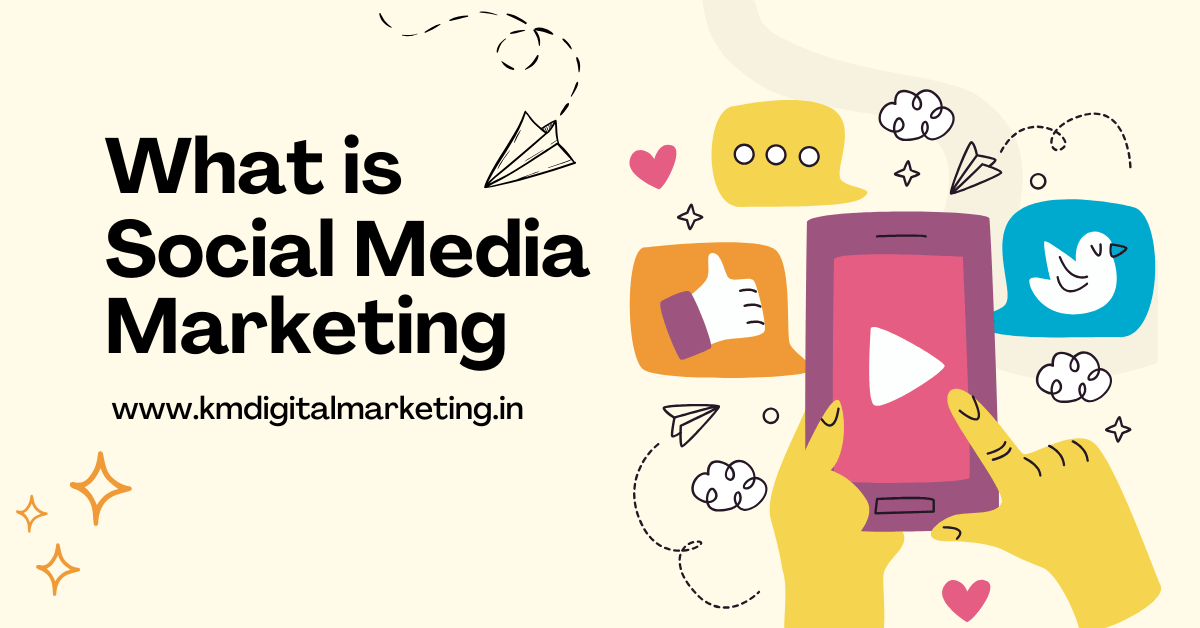
Social media marketing (SMM) is the practice of using social media platforms to promote your brand, engage with your audience, drive website traffic, and ultimately generate leads or sales. It involves creating and sharing content — including text, images, videos, and stories — tailored to each platform’s unique style and audience.
But it’s not just about posting content. Effective social media marketing includes strategic planning, community engagement, paid advertising, analytics, and continuous optimization. It’s a dynamic, ever-evolving discipline that rewards businesses who commit to learning and adapting.

Why Social Media Marketing Matters for Your Business
The numbers speak for themselves. With over 5 billion people using social media globally, the potential reach is virtually unlimited. Whether you’re a small local business in West Bengal or a large enterprise, social media levels the playing field — giving you direct access to your target audience at a fraction of traditional advertising costs.
Key benefits
Brand awareness: Consistent social media presence keeps your business top-of-mind for potential customers. Every post, story, and interaction is an opportunity to introduce your brand to new audiences.
Customer engagement: Unlike traditional advertising, social media allows two-way communication. You can respond to questions, gather feedback, and build genuine relationships with your customers.
Cost-effective marketing: Organic social media is essentially free. Even paid social advertising offers highly targeted, measurable results at costs far lower than TV, print, or radio.
Website traffic & SEO: Sharing content on social media drives visitors to your website. While social signals aren’t a direct Google ranking factor, increased traffic and brand searches can indirectly boost your search visibility.
Lead generation & sales: With shopping features now built into Instagram, Facebook, and Pinterest, social media has become a direct sales channel for many businesses.
Choosing the Right Platforms
One of the biggest mistakes businesses make is trying to be everywhere at once. Instead, focus on the platforms where your target audience actually spends time. Here’s a quick breakdown:
Best for local businesses, community building, and targeted paid ads. Largest global user base with strong demographic variety.
Ideal for visual brands — fashion, food, travel, lifestyle. Reels and Stories drive high engagement, especially with younger audiences.
The go-to platform for B2B marketing, professional services, and thought leadership content targeting decision makers.
YouTube
Perfect for long-form educational content, tutorials, and reviews. The second-largest search engine in the world after Google.
X (Twitter)
Great for real-time updates, brand voice, industry news, and joining trending conversations in your niche.
WhatsApp / Telegram
Rising tools for direct community engagement in India. Ideal for customer support and nurturing loyal audiences.
Pro tip
Start with two or three platforms that align with your audience and content strengths. Master those before expanding. Quality presence on fewer platforms always outperforms a scattered presence on many.

Build a Social Media Marketing Strategy That Works
Success on social media doesn’t happen by accident. It requires a clear strategy aligned with your business goals. Here’s how to build one from scratch:
Step 1 — define your goals
What do you want social media to achieve? Common goals include increasing brand awareness, driving website traffic, generating leads, improving customer retention, or growing a community. Your goals will shape every decision — from the platforms you choose to the content you create.
Step 2 — know your audience
Who are you trying to reach? Build detailed audience personas that include demographics (age, location, income), psychographics (interests, values, pain points), and behavioral patterns (when they’re online, what content they engage with). The better you understand your audience, the more relevant and effective your content will be.
Step 3 — plan your content mix
A healthy social media content mix typically follows the 80/20 rule: 80% educational, entertaining, or value-driven content, and 20% promotional content. Vary your formats — use a mix of images, short-form videos (Reels, Shorts), long-form videos, infographics, carousels, polls, and stories to keep your feed fresh and engaging.
Step 4 — create a content calendar
Consistency is key. Plan your posts in advance using a content calendar. This ensures you’re posting regularly, aligning content with seasonal trends or business events, and maintaining a balanced mix of topics. Tools like Buffer, Hootsuite, or Meta Business Suite can help you schedule posts ahead of time.
Step 5 — engage actively
Posting content is only half the job. Responding to comments, answering DMs, engaging with your followers’ content, and participating in relevant conversations is what builds a real community. Set aside time every day to engage — even 20 minutes can make a significant difference in your account’s growth and reach.

The Power of Video Content
If there’s one trend that has dominated social media over the last three years, it’s short-form video. Platforms like Instagram Reels, YouTube Shorts, and Facebook Reels have skyrocketed in popularity, and algorithms heavily favor video content over static posts.
You don’t need a professional studio to create effective video content. A smartphone with good lighting, a clear message, and authentic delivery is often more than enough. Focus on value — tutorials, behind-the-scenes glimpses, customer testimonials, quick tips, and product demonstrations all perform exceptionally well.
Content idea
Create a recurring weekly video series — such as “Marketing Monday Tips” or “Business Insight of the Week” — to build a loyal following that tunes in regularly for your expertise.

Social Media Marketing: Amplifying Your Reach
Organic reach on most platforms has declined significantly over the years as feeds become more crowded. This is where paid social advertising comes in. Even a modest budget, spent strategically, can dramatically expand your reach and accelerate results.
Meta Ads (Facebook and Instagram) remain among the most powerful advertising tools available, offering granular targeting by location, age, interests, behavior, and even life events. LinkedIn Ads are the gold standard for B2B targeting. YouTube pre-roll ads are excellent for brand awareness campaigns.
Start small — even ₹500 to ₹1,000 per day can generate meaningful results if your targeting, creative, and landing page are well-optimized. Always test multiple ad variations (A/B testing) to identify what resonates best with your audience before scaling up your budget.
Measuring Success: What Metrics Actually Matter
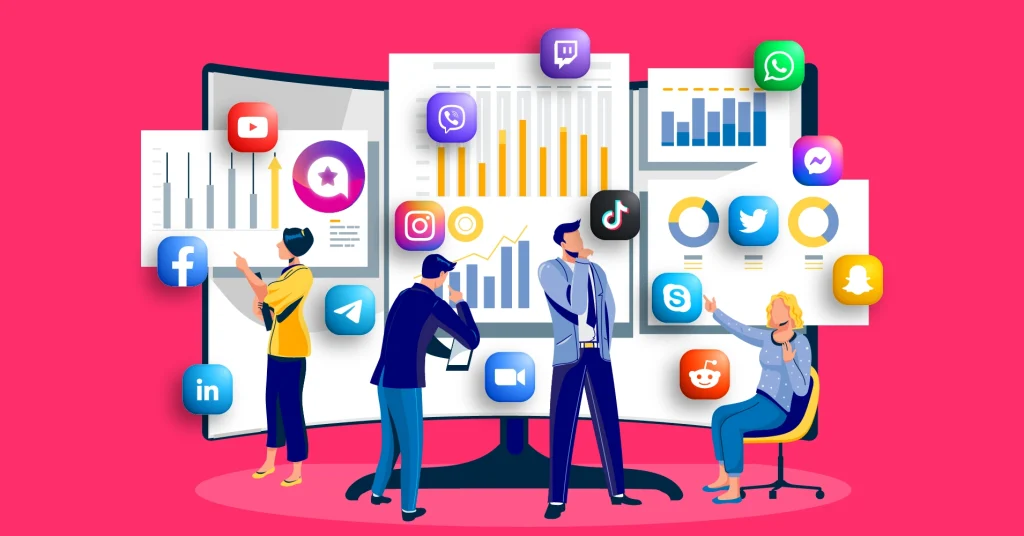
Data is at the heart of effective social media marketing(SMM). Without measuring your performance, you’re essentially flying blind. But not all metrics are created equal. Vanity metrics like follower count can be misleading — focus instead on metrics that directly tie to your business goals:
Reach & impressions — how many people are seeing your content. Engagement rate — the percentage of your audience that actively interacts with your content (likes, comments, shares, saves). Click-through rate (CTR) — how many people click through to your website or landing page. Conversion rate — of those who click, how many complete a desired action (form fill, purchase, inquiry). Cost per lead or cost per acquisition — for paid campaigns, this tells you how efficiently you’re spending your budget.
Review your analytics at least monthly, identify what’s working and what isn’t, and adjust your strategy accordingly. Social media success is an iterative process.
Common Mistakes to Avoid
Many businesses start social media marketing with enthusiasm, only to lose momentum or see poor results due to avoidable mistakes. Being inconsistent with posting, ignoring negative comments or reviews, posting only promotional content without providing value, using the same content across all platforms without adapting it, and failing to track performance are among the most common pitfalls.
Treat social media as a long-term investment. The businesses that win on social media are those who show up consistently, provide genuine value, and stay committed through the slow early stages when results aren’t immediately visible.
Final Thoughts
Social media marketing, when done right, is one of the most powerful and cost-effective tools available to modern businesses. It allows you to build meaningful relationships with your audience, establish your brand as an authority in your industry, and drive measurable business growth.
The key is to start with a clear strategy, commit to consistency, create content that genuinely helps or entertains your audience, and never stop learning. The social media landscape changes constantly, but the fundamentals — authenticity, value, and engagement — remain timeless.
Whether you’re just starting out or looking to take your social media presence to the next level, KM Digital Marketing is here to help. Our team of experienced digital marketing professionals can craft a tailored social media strategy that delivers real, measurable results for your business.
Reference: Click Here

[…] Social Media Marketing in 2026: A Complete Guide to Growing Your Brand Online […]
[…] Social Media Marketing: Building brand presence and engagement on platforms like Instagram, Facebook, LinkedIn, and YouTube. […]