
Affiliate Marketing in 2026 – The Proper Way of Growing Online

|
Listen to the Article - KM Digital Marketing
Getting your Trinity Audio player ready...
|
Affiliate marketing has quietly become one of the most powerful income streams in the digital world — but most people barely scratch the surface of its potential. This guide breaks down everything you need to know, from the very basics to advanced strategies that actually work.
Table of Contents
What Is Affiliate Marketing?
Affiliate marketing is a performance-based marketing model where an individual (the affiliate) earns a commission by promoting another company’s products or services. When someone clicks your unique affiliate link and makes a purchase, you get paid — it’s that simple in concept, yet rich in strategy.
Think of it as being a digital salesperson, except you don’t handle inventory, customer service, or product development. Your job is purely to connect the right audience with the right product.
How Does Affiliate Marketing Work?
The affiliate marketing ecosystem involves three key players:
- The Merchant (Advertiser): The business that creates and owns the product or service — e.g., an e-commerce brand, a SaaS company, or a course creator.
- The Affiliate (Publisher): You — the marketer who promotes the merchant’s products in exchange for a commission.
- The Consumer: The end user who clicks your link and (hopefully) makes a purchase.
There’s often a fourth player — the Affiliate Network (like Amazon Associates, ShareASale, or ClickBank) — which acts as a middleman managing tracking, payments, and relationships between affiliates and merchants.
💡 How the Tracking Works
When you join an affiliate program, you receive a unique tracking link (URL). Every time someone clicks that link, a small cookie is stored in their browser. If they complete a purchase within the cookie window (usually 24–90 days), the sale is credited to you and you earn your commission.

Types of Affiliate Marketing
Affiliate marketing isn’t one-size-fits-all. There are three main types based on how involved you are with the product:
1. Unattached Affiliate Marketing
You have no connection to the product or niche. You simply run pay-per-click (PPC) ads with your affiliate link. Low commitment, but also lower trust and conversion rates.
2. Related Affiliate Marketing
You have some presence or authority in a niche and promote products related to it — even if you haven’t personally used them. For example, a fitness blogger promoting gym equipment they haven’t tested.
3. Involved Affiliate Marketing
This is the most powerful approach. You personally use and believe in the products you promote. Your recommendation carries authentic credibility, which dramatically increases conversion. This is the model most top affiliate marketers use.
How to Get Started: Step-by-Step
1. Choose Your Niche
Pick a topic you’re genuinely interested in and that has commercial potential — finance, health, tech, travel, education, and e-commerce are perennially strong niches.
2. Select an Affiliate Program
Research programs relevant to your niche. Consider commission rates, cookie duration, and the merchant’s reputation before signing up.
3. Build Your Platform
Create a blog, YouTube channel, newsletter, or social media presence where you’ll publish content and embed your affiliate links naturally.
4. Create High-Quality Content
Write reviews, tutorials, comparisons, and guides that genuinely help your audience. Great content is the foundation of long-term affiliate income.
5. Drive Traffic
Use SEO, social media, email marketing, or paid ads to bring visitors to your content. Without traffic, there are no clicks and no commissions.
6. Track, Optimise & Scale
Use analytics to see what’s working. Double down on top-performing content and links, and slowly expand your content library over time.
Top Affiliate Programs to Consider
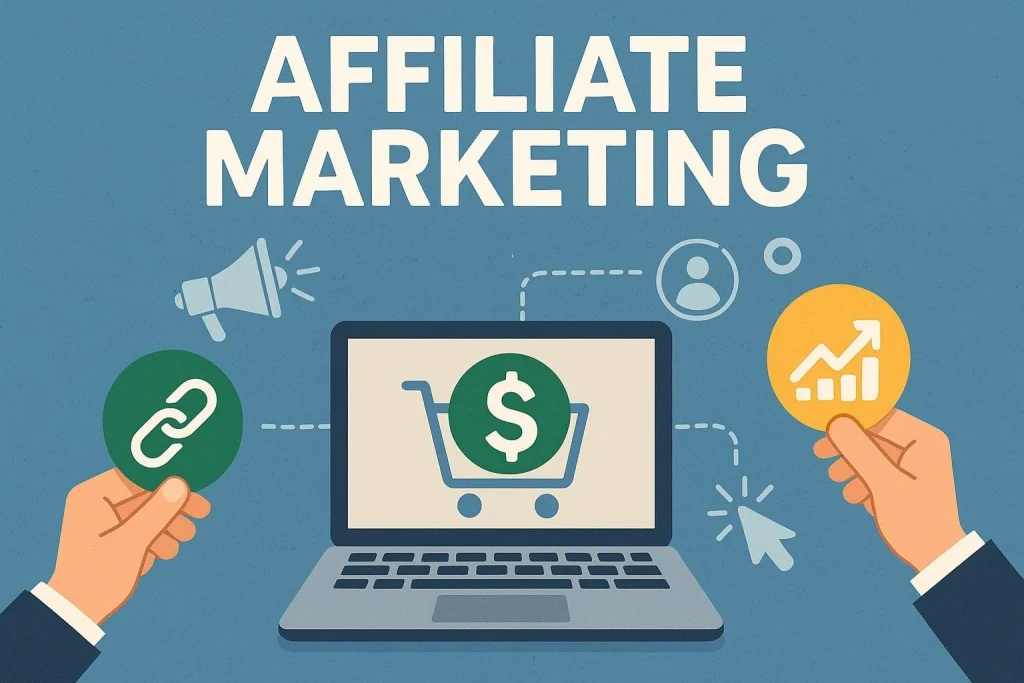
Here are some of the most popular and reputable affiliate programs across categories:
- Amazon Associates: Huge product range, trusted brand, but low commission rates (1–10%). Great for beginners.
- ClickBank: Specialises in digital products with very high commission rates (up to 75%). Popular in health, finance, and self-help.
- ShareASale & CJ Affiliate: Large affiliate networks with thousands of merchants across all niches.
- Hostinger / Bluehost / WP Engine: Web hosting affiliates — extremely high payouts ($50–$200+ per sale). Perfect for digital marketing or tech blogs.
- SEMrush / HubSpot / Teachable: SaaS and software affiliates with recurring commissions — you earn every month as long as the customer stays.
🌟 Pro Tip: Recurring Commissions
Some of the most lucrative affiliate programs offer recurring monthly commissions — meaning you earn every single month for each customer you refer, not just once. Always prioritise these programmes when available in your niche.
Content Strategies That Convert
Your content is your most powerful asset. Here are the content formats proven to generate affiliate sales:
- Product Reviews: Honest, in-depth reviews with pros, cons, and your personal experience. These rank well on Google and convert highly.
- Comparison Posts: “Tool A vs Tool B” articles attract buyers who are almost ready to purchase — they just need help deciding.
- Tutorials & How-To Guides: Teaching someone to use a product naturally integrates your affiliate link in a helpful, non-pushy way.
- “Best Of” Listicles: “Best email marketing tools for small businesses” — these rank for high-intent keywords and allow you to feature multiple affiliate products.
- Email Newsletters: Building an email list means you own your audience. A well-crafted newsletter can drive consistent affiliate sales directly to your subscribers.
- YouTube Videos: Video reviews and tutorials have huge conversion power — viewers see the product in action and trust your recommendation more.
SEO for Affiliate Marketing
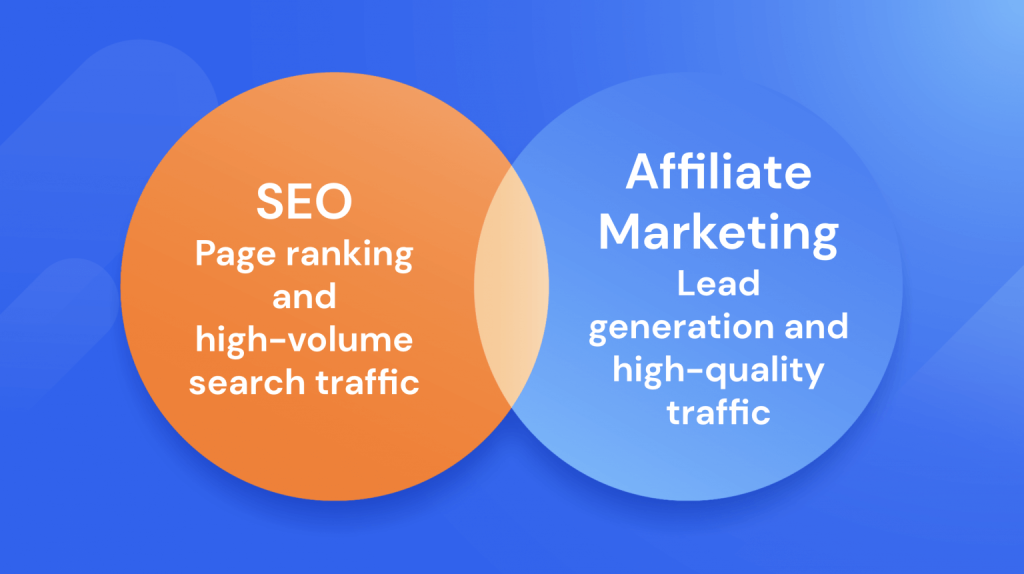
Search Engine Optimisation (SEO) is the lifeblood of most successful affiliate businesses. Organic traffic from Google is free, consistent, and highly targeted. Here’s how to approach SEO for affiliate content:
- Keyword Research: Target “buyer intent” keywords — searches like “best”, “review”, “vs”, “how to buy”, or “alternatives to” indicate someone is close to making a purchase decision.
- On-Page SEO: Optimise your titles, headings (H1, H2, H3), meta descriptions, and image alt text with your target keywords.
- Quality Backlinks: Earn links from reputable websites in your niche to boost your domain authority and search rankings.
- User Experience: Fast-loading pages, mobile responsiveness, and easy navigation all contribute to better rankings and lower bounce rates.
- Content Freshness: Update older posts regularly. Google rewards up-to-date, relevant content — especially for product recommendations that change over time.
Common Mistakes to Avoid
Many beginners fail at affiliate marketing not because the model doesn’t work, but because they fall into predictable traps:
- Promoting too many products: Focus on a few high-quality, relevant products rather than scattering your energy across dozens of affiliate links.
- Not disclosing affiliate relationships: This is both a legal requirement (FTC guidelines) and an ethical responsibility. Always disclose that your links are affiliate links — your audience will respect you for it.
- Chasing commission rates over relevance: A 50% commission on a product your audience doesn’t need will always underperform a 10% commission on something they genuinely want.
- Neglecting content quality: Thin, spammy, or misleading content may get short-term clicks but kills long-term trust and SEO performance.
- Ignoring email list building: Relying solely on social media or SEO traffic is risky. An email list is an asset you own and control.
- Giving up too soon: Affiliate marketing is a long game. Most successful affiliates took 6–18 months before seeing meaningful income.
How Much Can You Earn?
Earnings vary enormously depending on your niche, traffic volume, conversion rate, and commission structure. Here’s a realistic breakdown:
- Beginner (0–6 months): ₹0 – ₹5,000/month — Learning, building content, and establishing traffic.
- Intermediate (6–18 months): ₹5,000 – ₹50,000/month — Growing audience, consistent content, optimising conversions.
- Advanced (18+ months): ₹50,000 – ₹5,00,000+/month — Multiple traffic channels, high-converting niche sites, recurring commissions.
Top affiliate marketers in competitive niches like finance, SaaS, or health can earn several lakhs per month. But these results come from consistent effort, smart strategy, and patience.
📊 Realistic Expectations
Affiliate marketing is not a “get rich quick” scheme. It requires time, skill, and consistent effort. However, unlike most businesses, your income can become largely passive once your content starts ranking and your systems are in place. That’s the true power of this model.
Affiliate Marketing in India: A Growing Opportunity
India’s digital economy is booming. With over 900 million internet users and a rapidly expanding e-commerce market, the opportunity for affiliate marketers targeting Indian audiences has never been greater. Platforms like Flipkart Affiliate, Amazon India Associates, Meesho, and Indian SaaS companies are actively looking for affiliates. Regional language content — in Hindi, Bengali, Tamil, or Telugu — is particularly underserved and can drive exceptional engagement.
If you’re based in India, this is an especially compelling time to get started. The competition is lower than Western markets, yet the audience is massive and growing every day.
Final Thoughts
Affiliate marketing remains one of the most accessible and scalable ways to build an online income. Whether you’re a blogger, content creator, YouTuber, or digital marketer, there is a path into affiliate marketing that fits your strengths.
The formula is simple: choose a niche you know, create content that genuinely helps people, recommend products you believe in, and be consistent. The income will follow.
At KM Digital Marketing, we help businesses and individuals navigate the digital landscape with clarity and confidence. If you have questions about affiliate marketing or want to build a strategy tailored to your goals, we’re here to help.
Reference: Click Here


Thanks for breaking down affiliate marketing in such a clear and actionable way. It’s easy to get overwhelmed by the noise, but your step-by-step approach makes it much more approachable for someone looking to build a sustainable income stream. I especially appreciated the emphasis on long-term strategy over quick wins — that’s a mindset shift I needed to make.
I love how this guide touches on both the basics and advanced strategies of affiliate marketing. It’s true that many marketers only scratch the surface and miss out on a lot of potential. Focusing on a clear understanding of the different types of affiliate marketing is key to scaling effectively.