KEY TAKEAWAYS
- Digital marketing is the promotion of products, services, or brands through online channels such as search engines, social media, email, and websites.
- India’s digital marketing industry is valued at USD 6.71 billion in 2025 and is projected to reach USD 93.94 billion by 2035 at a CAGR of 30.20%.
- The 8 main types of digital marketing are SEO, content marketing, social media marketing, email marketing, PPC advertising, affiliate marketing, influencer marketing, and video marketing.
- Digital marketing is now more cost-effective, measurable, and targeted than any form of traditional marketing.
- Whether you are a small business owner, freelancer, blogger, or marketer in India, digital marketing is no longer optional — it is essential for growth in 2026.
Your competitor just got 10,000 visitors to their website last month. You got 200. They are ranking on page one of Google. You are on page four. They are making sales daily from social media. You are still printing pamphlets.
The difference between them and you is not budget, talent, or luck. The difference is digital marketing.
If you have ever wondered what is digital marketing, how it actually works, and why every business in India is investing in it right now — this guide has every answer you need. We cover everything from the basics to the strategies that work in 2026, specifically for the Indian market.
What is Digital Marketing? A Clear, Simple Definition
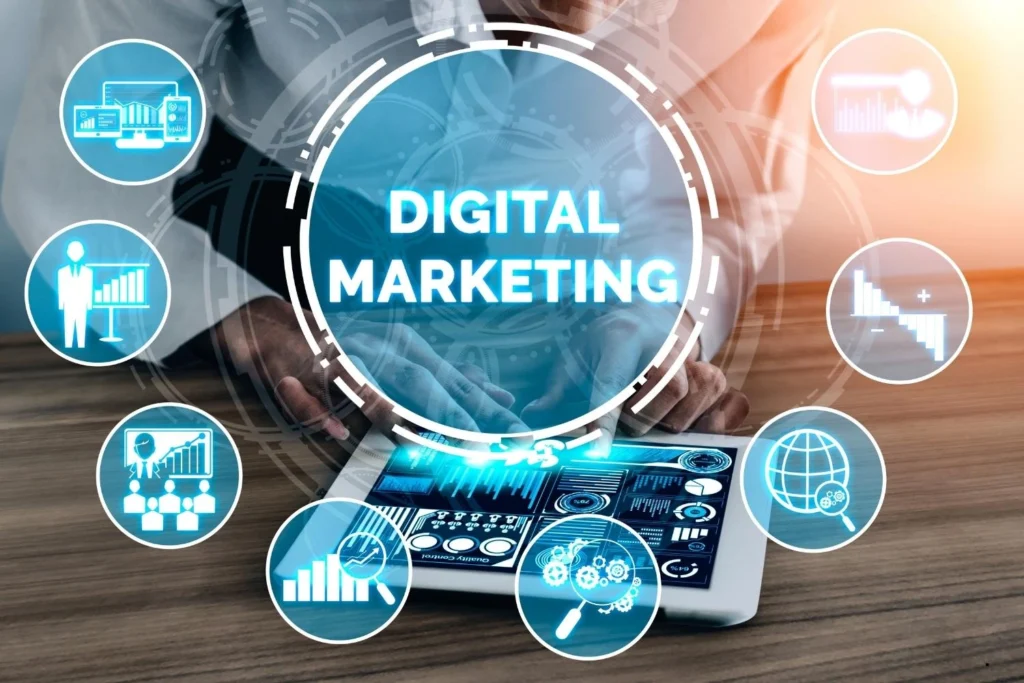
Digital marketing is the promotion of products, services, or brands through digital channels and technologies — including search engines, social media platforms, email, websites, mobile apps, and online advertising.
In simple terms, it is marketing that happens on the internet.
Unlike traditional marketing — which uses print ads, television commercials, banners, and pamphlets — digital marketing allows businesses to reach their exact target audience at a fraction of the cost, with the ability to measure every single result in real time.
Moreover, digital marketing works for businesses of every size. Whether you run a small kirana store in Kolkata, a freelance design studio in Bengaluru, or an e-commerce brand serving customers across India — digital marketing gives you the tools to compete with companies ten times your size.
Why Digital Marketing is Critical for India in 2026
The numbers tell a clear story.
India’s total advertising spending in FY2025 reached Rs. 1,11,000 crore, an 11% growth over FY2024. Digital advertising now commands 44% of the entire advertising market at Rs. 49,000 crore, marking 20% year-on-year growth — overtaking television for the first time.
The Indian digital marketing market was valued at USD 6.71 billion in 2025 and is expected to grow at a CAGR of 30.20% to reach USD 93.94 billion by 2035.
India added 56 million new internet users in 2025, taking the total base to 806 million users — a penetration rate of 55.3%.
Consequently, businesses that are not investing in digital marketing are actively losing customers to those that are. For Indian small businesses, freelancers, and bloggers, this is both a warning and an enormous opportunity.
The 8 Main Types of Digital Marketing Explained
Understanding what is digital marketing means understanding its components. Here are the 8 core types every Indian business should know:
1. Search Engine Optimisation (SEO)
SEO is the process of optimising your website so it ranks higher in Google and other search engine results — without paying for ads.
When someone searches “best digital marketing agency in Mumbai” or “weight loss tips India,” the websites appearing at the top have invested in SEO. Higher rankings mean more organic (free) traffic, more leads, and more sales.
SEO involves optimising your website’s content, structure, speed, and authority through backlinks and technical improvements.
Why it matters for India: SEO remains the highest-ROI channel for most businesses globally, even as organic search faces pressure from AI and zero-click results.
2. Content Marketing
Content marketing is the strategy of creating and distributing valuable, relevant content to attract and retain a clearly defined audience.
This includes blog posts, how-to guides, infographics, case studies, whitepapers, and educational videos. The goal is to provide real value to your audience first — and convert them into customers over time.
Content marketing builds trust, establishes authority, and works hand in hand with SEO to drive long-term organic traffic.
Pro Tip: For Indian businesses, creating content in regional languages — Hindi, Tamil, Bengali, Telugu — is a massive untapped opportunity that can capture local search traffic with very low competition.
3. Social Media Marketing
Social media marketing is the use of platforms like Instagram, Facebook, YouTube, LinkedIn, and X (formerly Twitter) to build brand awareness, engage with audiences, and drive sales.
India has one of the largest and most active social media user bases in the world. <cite index=”8-1″>The influencer marketing industry in India is set to grow to approximately USD 400 million by 2026, as brands increasingly leverage content creators to engage wide audiences.</cite>
For small businesses and freelancers, platforms like Instagram and Facebook offer powerful free tools for reaching highly targeted local audiences without spending a single rupee on ads.
4. Email Marketing
Email marketing is the practice of sending targeted messages directly to a list of subscribers who have opted in to receive communication from you.
It remains one of the highest ROI marketing channels in the world, with an average return of Rs. 3,600 for every Rs. 100 spent, according to industry benchmarks. Additionally, email marketing allows you to communicate directly with your audience — without depending on a social media algorithm.
For bloggers and e-commerce businesses in India, building an email list from day one is one of the smartest long-term digital marketing decisions you can make.
5. Pay-Per-Click Advertising (PPC)
PPC advertising allows businesses to display ads on Google, Facebook, Instagram, and other platforms and pay only when someone clicks on the ad.
Google Ads and Meta Ads (Facebook and Instagram) are the two most widely used PPC platforms in India. They allow even small businesses to reach extremely specific audiences based on location, age, interests, income, and behaviour.
Search advertising is continuing double-digit growth at 11.1% year-on-year globally in 2026, confirming that paid search remains a core investment for businesses.
6. Affiliate Marketing
Affiliate marketing is a performance-based model where businesses pay a commission to partners (affiliates) who promote their products and drive sales or leads.
For bloggers and content creators in India, affiliate marketing is one of the most powerful income streams available. Platforms like Amazon Associates, HealthKart, Flipkart Affiliate, and ClickBank allow you to earn commissions by recommending products to your audience.
Consequently, affiliate marketing benefits both the business (which pays only for results) and the affiliate (who earns passive income without creating a product).
7. Influencer Marketing
Influencer marketing involves partnering with individuals who have a significant and engaged social media following to promote your products or services.
In India, influencer marketing has evolved well beyond Bollywood celebrities. Micro-influencers — creators with 10,000 to 100,000 followers in niche categories like fitness, cooking, personal finance, and education — often deliver higher engagement rates and better ROI than traditional celebrity endorsements.
According to a report by EY, the influencer marketing industry in India is on a meteoric rise, with influencers playing a key role in shaping consumer purchase behaviour across digital platforms.
8. Video Marketing
Video marketing is the use of video content to promote your brand, educate your audience, and drive conversions.
Video consumption dominates mobile usage in India, with approximately 55% of mobile activity dedicated to video viewing, driving enormous demand for digital video content.
YouTube, Instagram Reels, and YouTube Shorts are the most powerful video marketing platforms for Indian businesses in 2026. Short-form video content — between 15 and 90 seconds — consistently outperforms all other content formats in terms of reach and engagement.
Digital Marketing vs Traditional Marketing: A Clear Comparison
| Feature | Digital Marketing | Traditional Marketing |
|---|---|---|
| Cost | Low to medium | High |
| Reach | Global and local | Mostly local |
| Targeting | Highly specific | Broad |
| Measurability | Real-time data | Difficult to measure |
| Speed | Instant | Slow |
| Interaction | Two-way | One-way |
| Best For | All business sizes | Large businesses |
| ROI Tracking | Precise | Approximate |
The verdict is clear. For Indian small businesses, freelancers, and bloggers working with limited budgets, digital marketing delivers far superior results per rupee spent compared to traditional marketing methods.
How Digital Marketing Works: Step-by-Step for Beginners
If you are just starting out, here is a simple step-by-step framework to launch your digital marketing strategy:
Step 1: Define Your Goal Decide what you want to achieve. More website visitors? More leads? More sales? More followers? Each goal requires a different strategy.
Step 2: Identify Your Target Audience Know exactly who you are trying to reach. Define their age, location, interests, problems, and buying behaviour. In India, also consider which language they prefer — Hindi, English, or regional.
Step 3: Choose the Right Channels Not every platform suits every business. A B2B software company in Pune should focus on LinkedIn and Google Ads. A handmade jewellery brand in Jaipur should focus on Instagram and Pinterest.
Step 4: Create Valuable Content Produce content that genuinely helps your target audience. Solve their problems. Answer their questions. Build trust before asking for a sale.
Step 5: Optimise for Search Engines Make sure your website and content are optimised for the keywords your audience is searching. Use tools like Google Search Console, Ubersuggest, or Rank Math SEO to guide your optimisation.
Step 6: Run Targeted Ads (When Ready) Once you have a clear offer and a working funnel, invest in Google Ads or Meta Ads to scale your reach quickly. Start small, measure results, and scale what works.
Step 7: Build Your Email List Capture email addresses from day one using a lead magnet — a free guide, checklist, or discount offer. Your email list is an asset you own, unlike your social media following.
Step 8: Track, Analyse and Improve Use Google Analytics 4, Google Search Console, and platform insights to monitor performance. Identify what is working, double down on it, and eliminate what is not.
Digital Marketing for Different Audiences in India
For Small Business Owners
Focus on local SEO first. Make sure your Google Business Profile is complete and optimised. Then build a presence on WhatsApp Business and Facebook. These three channels alone can transform a local business’s visibility without a large budget.
For Freelancers
LinkedIn is your most powerful tool. Optimise your profile with relevant keywords, post content demonstrating your expertise consistently, and reach out to potential clients directly. Additionally, build a personal website showcasing your portfolio — it dramatically increases client trust and conversion.
For Bloggers
SEO and content marketing are the foundation of a successful blog. Additionally, Pinterest is a highly underutilised platform by Indian bloggers that can drive significant free traffic, especially in niches like health, food, lifestyle, and home decor.
For Marketers
Stay updated with emerging trends — AI-powered marketing tools, voice search optimisation, short-form video, and vernacular content are the biggest opportunities in India’s digital marketing landscape in 2026.
Key Digital Marketing Trends in India for 2026
India’s digital marketing industry is projected to reach Rs. 539 billion by the end of 2026, driven by rising internet penetration, affordable data, and rapid smartphone adoption.
The most important trends shaping digital marketing in India right now are:
AI-Powered Marketing: Artificial intelligence is transforming how marketers create content, analyse data, and personalise customer experiences. Tools like ChatGPT, Google Gemini, and AI-powered ad platforms are becoming standard in every marketer’s toolkit.
Voice Search Optimisation: According to Google, the number of Indians using voice search is twice the global average. Optimising content for conversational, question-based queries is therefore critical for Indian marketers in 2026.
Vernacular Content: Creating content in Hindi, Tamil, Bengali, Telugu, Kannada, and other regional languages unlocks massive audiences in tier-2 and tier-3 Indian cities where English content is limited.
Short-Form Video: Instagram Reels, YouTube Shorts, and similar short video formats continue to dominate engagement metrics across all demographics in India.
Privacy-First Marketing: With the shift to a cookieless future, personalised first-party data strategies and transparent engagement are becoming central to effective digital marketing.
How Much Does Digital Marketing Cost in India?
One of the most common questions from small business owners is about cost. Here is a realistic overview:
| Channel | Monthly Cost (Small Business) | Expected Result |
|---|---|---|
| SEO (DIY) | Rs. 0 — Rs. 5,000 (tools) | Organic traffic in 3–6 months |
| SEO (Agency) | Rs. 10,000 — Rs. 50,000 | Faster results, expert guidance |
| Google Ads | Rs. 5,000 — Rs. 30,000 | Immediate traffic |
| Facebook/Instagram Ads | Rs. 3,000 — Rs. 20,000 | Brand awareness and leads |
| Content Writing | Rs. 500 — Rs. 3,000 per article | Authority and SEO |
| Email Marketing | Rs. 0 — Rs. 2,000 (tools) | High ROI on existing list |
| Social Media Management | Rs. 5,000 — Rs. 20,000 | Consistent brand presence |
The beauty of digital marketing is that you can start with a budget of as little as Rs. 3,000 per month and scale gradually as your results improve.
